

What is a bone fracture?
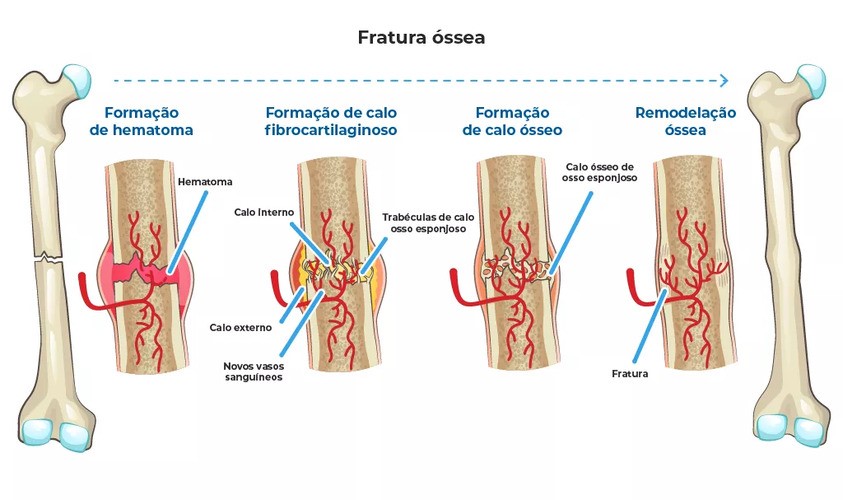
A bone fracture is an injury that occurs when the force applied to a bone is greater than the bone's ability to withstand it. This excessive force can break the bone, ranging from a small crack to a complete fracture, where the bone breaks into pieces
Symptoms
The symptoms of a bone fracture can vary depending on the severity and location of the fracture, but they generally include:
- severe pain in the affected area: the pain can be intense and localized, and may worsen with movement or pressure on the fractured bone
- Swelling and bruising: the area around the fracture may become swollen and show bruising (purple or blue marks) due to internal bleeding
- Inability to move the affected area normally: a fracture can make it difficult or even impossible to move the affected part of the body
- Tenderness to touch: the region around the fracture may be sensitive and painful when touched
Causes
Bone fractures can be caused by a variety of events and conditions, including:
- Physical trauma: falls, car accidents, sports injuries, and other types of physical trauma can result in bone fractures
- Osteoporosis: a condition in which bones become fragile and prone to fractures. This can occur due to loss of bone density, making bones more susceptible to breaking even with minor trauma or falls
- Age-related factors: as people age, their bones may become more fragile due to decreased bone density and loss of muscle mass, making them more susceptible to fractures from falls or minor injuries
Diagnosis
The diagnosis of a bone fracture usually involves a combination of medical history, physical examination, and imaging tests. The main diagnostic methods used include:
- Medical history and physical examination: questions about symptoms such as pain, swelling, inability to move the affected area, and the event that may have caused the injury
- X-ray: commonly used to confirm the presence of a bone fracture. X-rays can show the location, type, and extent of the fracture. Depending on the severity, different X-ray views may be needed to properly visualize the injury
- Ultrasound: in some situations, especially in infants and young children, ultrasound can be used to assess fractures, particularly of the clavicle and extremities
Treatment
The treatment of a bone fracture depends on the severity, location, and type of fracture. Here are some of the most common treatment options:
- Immobilization: in many cases, especially with simple and stable fractures, immobilizing the affected area is sufficient to allow proper bone healing. This can be done using a splint, cast, brace, or walking boot, depending on the location and severity of the fracture
- Closed reduction: in some misaligned or unstable fractures, it may be necessary to manually realign the broken bones in a procedure called closed reduction. After realignment, the area is immobilized to allow healing
- Surgery: for more complex fractures—such as open fractures, fractures broken into multiple fragments, or fractures involving joints—surgery may be required
- Medication: the doctor may prescribe medications to help manage pain and reduce the risk of infection, especially in cases of open fractures
Prevention
Preventing bone fractures involves several strategies aimed at strengthening bones, reducing the risk of falls, and promoting a healthy lifestyle:
- Adequate intake of calcium and vitamin D: a diet rich in calcium and vitamin D is essential for bone health. Foods such as milk, cheese, yogurt, leafy green vegetables, and certain types of fish are good sources of these nutrients
- Regular physical activity: activities like walking, running, dancing, and strength training help strengthen bones. It’s also important to include balance and flexibility exercises to reduce the risk of falls
- Use of protective equipment: in sports or work environments where there is a risk of injury, it is important to use appropriate protective gear such as helmets, knee pads, elbow pads, and impact protectors
References
Bone Fracture – Ministry of Health
First Aid – Ministry of Health
Saúde e Bem-Estar
You may also be interested in reading about:

Condição Femur fracture:
the femur is the thigh bone, the largest in the human body. Its upper end is where the lower limb co [...]
the femur is the thigh bone, the largest in the human body. Its upper end is where the low [...]

Condição Toe fractures:
fractures of the toe bones are very common. These bones are called phalanges
fractures of the toe bones are very common. These bones are called phalanges

Condição Proximal humerus fractures:
proximal humerus fractures account for 5 to 10% of all fractures. Their incidence increases with age [...]
proximal humerus fractures account for 5 to 10% of all fractures. Their incidence increase [...]

Femur fracture:
the femur is the thigh bone, the largest in the human body. Its upper end is where the lower limb co [...]
the femur is the thigh bone, the largest in the human body. Its upper end is where the low [...]

Toe fractures:
fractures of the toe bones are very common. These bones are called phalanges
fractures of the toe bones are very common. These bones are called phalanges

Proximal humerus fractures:
proximal humerus fractures account for 5 to 10% of all fractures. Their incidence increases with age [...]
proximal humerus fractures account for 5 to 10% of all fractures. Their incidence increase [...]