
Dementia
Einstein Health Glossary
ICD 10 - F03

ICD 10 - F03
Dementia is the loss of the ability to think, remember, and make decisions, which affects daily life. It is not a single disease, but a broad term that includes different conditions. Each type of dementia has specific symptoms. For example, in Alzheimer's disease, memory loss is usually the first sign; whereas in frontotemporal dementia, the most noticeable changes occur in personality, behavior, and judgment
The symptoms of dementia can vary depending on the type of disease, the areas of the brain involved, and the severity, but they generally include:
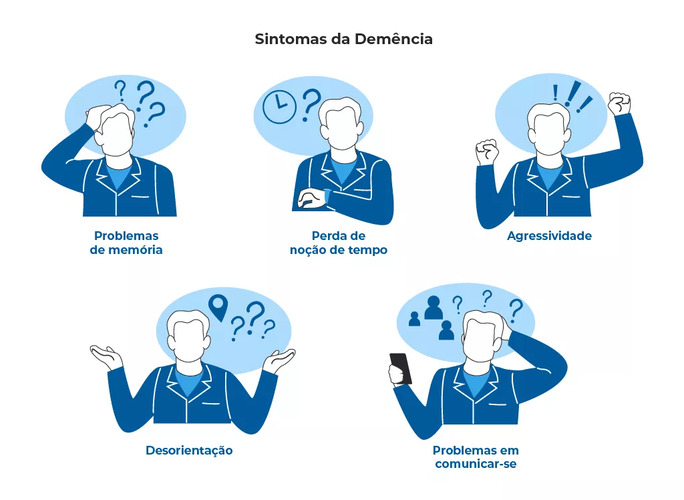
The causes of dementia depend on the disease it is associated with:
Alzheimer’s disease and vascular dementia are among the most common forms of dementia in older adults, accounting for about 80% to 90% of cases. In addition to these, frontotemporal dementia is also notable, as described below:
Diagnosing dementia requires an evaluation of symptoms along with physical and neurological examinations. The main steps in the diagnostic process include:
The medical specialty responsible for diagnosing and treating dementia varies depending on the symptoms and type, but neurologists are often involved in the care of these patients
Treating the various types of dementia is challenging. For Alzheimer’s, for example, there is no definitive cure. However, in addition to medications, there are other therapies such as activities that stimulate the mind and body, which help improve the patient’s quality of life:
In the case of vascular dementia, managing conditions that affect heart health helps slow the disease’s progression, in addition to medications that assist in symptom control. For frontotemporal dementia, certain medications and speech therapy sessions may be beneficial in delaying its development

There is still no definitive way to prevent dementia. However, in general—and considering its different types—some strategies can help prevent or delay its symptoms:
Scientific Culture Institute of the Federal University of São Carlos
You may also be interested in reading about:

a progressive neurodegenerative disease that affects memory, thinking, and behavior
a progressive neurodegenerative disease that affects memory, thinking, and behavior

a condition caused by problems in the brain’s blood supply, usually due to small strokes or other co [...]
a condition caused by problems in the brain’s blood supply, usually due to small strokes o [...]

a central nervous system disorder that primarily affects movement. It is characterized by tremors, s [...]
a central nervous system disorder that primarily affects movement. It is characterized by [...]
a progressive neurodegenerative disease that affects memory, thinking, and behavior
a progressive neurodegenerative disease that affects memory, thinking, and behavior
a condition caused by problems in the brain’s blood supply, usually due to small strokes or other co [...]
a condition caused by problems in the brain’s blood supply, usually due to small strokes o [...]
a central nervous system disorder that primarily affects movement. It is characterized by tremors, s [...]
a central nervous system disorder that primarily affects movement. It is characterized by [...]