
Herpes
Einstein Health Glossary
ICD 10 - B00

ICD 10 - B00
Herpes is a disease caused by the herpes simplex virus and has two main types:
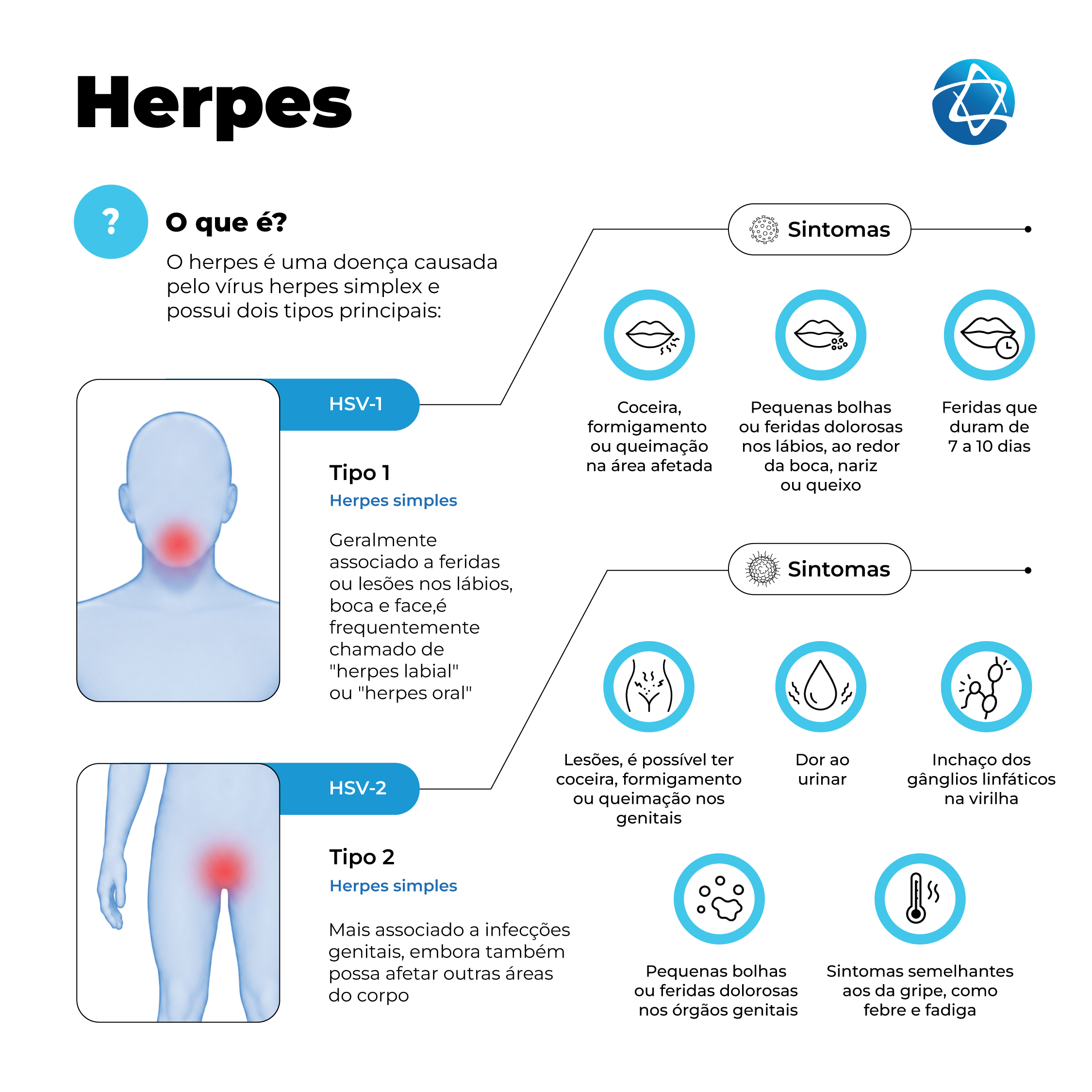
Herpes symptoms can vary from person to person and may depend on the type of virus involved. The most common include:
Oral Herpes (HSV-1)
Genital Herpes (HSV-2)
Herpes is caused by infection with the herpes simplex virus (HSV), which is highly contagious. There are two main types of herpes simplex virus, HSV-1 and HSV-2, and the main causes include:
Herpes is usually diagnosed by a healthcare professional, such as an infectious disease specialist. There are several ways to diagnose the condition, including:
The diagnosis is primarily clinical, based on examination of the lesions. Laboratory diagnostic methods are rarely necessary, and the most sensitive method is direct detection of the virus’s DNA from lesions
The treatment for herpes aims to relieve symptoms, reduce the frequency of outbreaks, and minimize the transmission of the virus to others. There is no definitive cure for the disease, as the herpes simplex virus (HSV) remains in the body after infection. The main treatment options include:
Keeping the affected area clean and dry is also important, as well as avoiding touching, scratching, or rubbing the lesions to prevent the virus from spreading
Preventing herpes, especially genital herpes, is important to reduce the risk of infection and transmission of the virus to others. Measures that can help prevent the disease include:
Openly discussing herpes status and infection history with a partner is also important, as it allows both individuals to make informed decisions about how to protect themselves and each other
You may also be interested in reading about:

a sexually transmitted disease that can cause sores on the skin and mucous membranes of male and fem [...]
a sexually transmitted disease that can cause sores on the skin and mucous membranes of ma [...]

an infection caused by the herpes simplex virus that leads to lesions near the lips
an infection caused by the herpes simplex virus that leads to lesions near the lips

occurs when the chickenpox (varicella) virus, which had been dormant in the body, becomes active aga [...]
occurs when the chickenpox (varicella) virus, which had been dormant in the body, becomes [...]
a sexually transmitted disease that can cause sores on the skin and mucous membranes of male and fem [...]
a sexually transmitted disease that can cause sores on the skin and mucous membranes of ma [...]
an infection caused by the herpes simplex virus that leads to lesions near the lips
an infection caused by the herpes simplex virus that leads to lesions near the lips
occurs when the chickenpox (varicella) virus, which had been dormant in the body, becomes active aga [...]
occurs when the chickenpox (varicella) virus, which had been dormant in the body, becomes [...]