
Whooping Cough
Einstein Health Glossary
ICD 10 - A37

ICD 10 - A37
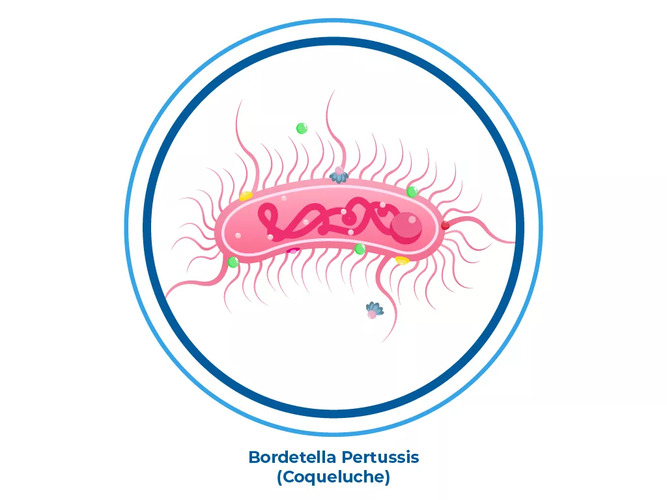
Whooping cough, also known as pertussis, is a highly contagious respiratory infection caused by the bacterium Bordetella pertussis. The bacteria attach to the cells of the respiratory system and release toxins that cause inflammation in the respiratory tract. The disease is characterized by a dry, intense cough that can last for weeks. It can affect people of all ages and requires special care, especially in infants and children
Transmission occurs through respiratory droplets expelled when an infected person coughs or sneezes. Therefore, early detection and isolation of infected individuals are essential to prevent the spread of whooping cough
Whooping cough develops in three distinct stages, with symptoms varying at each phase. Initial stage (catarrhal), lasts one to two weeks and often resembles a common cold:
Paroxysmal stage, lasts two to six weeks. This is the intermediate stage, where other signs appear:
Convalescent stage, can last for weeks or even months, with the main symptom being the gradual reduction of the cough
The diagnosis of whooping cough is based on the patient’s symptoms and laboratory tests. Severe coughing fits are a strong indication of the disease. However, these symptoms may not be present in all cases, especially in infants and adults
Laboratory tests can confirm the presence of Bordetella pertussis. The most sensitive and specific test for diagnosing whooping cough is PCR (polymerase chain reaction). This test can detect the bacteria’s DNA in a sample taken from the back of the throat or the nose
Treatment for whooping cough involves the use of antibiotics to eliminate the bacteria and reduce disease transmission. Measures such as rest, proper hydration, and correct use of prescribed medications to relieve symptoms are essential
It is important to keep the patient isolated until the treatment is completed to prevent the spread of the disease
The most effective way to prevent whooping cough is through vaccination. The whooping cough vaccine is part of the childhood immunization schedule in Brazil. It is safe and has minimal side effects. It is administered in multiple doses during childhood, with the first dose usually given at two months of age, followed by additional doses.
You may also be interested in reading about:

a chronic disease that causes inflammation and consequent narrowing of the bronchi, making it diffic [...]
a chronic disease that causes inflammation and consequent narrowing of the bronchi, making [...]

part of a group of diseases known as chronic obstructive pulmonary diseases (COPD). Caused by inflam [...]
part of a group of diseases known as chronic obstructive pulmonary diseases (COPD). Caused [...]

an infectious disease caused by the bacterium Mycobacterium tuberculosis. It mainly affects the lung [...]
an infectious disease caused by the bacterium Mycobacterium tuberculosis. It mainly affect [...]
a chronic disease that causes inflammation and consequent narrowing of the bronchi, making it diffic [...]
a chronic disease that causes inflammation and consequent narrowing of the bronchi, making [...]
part of a group of diseases known as chronic obstructive pulmonary diseases (COPD). Caused by inflam [...]
part of a group of diseases known as chronic obstructive pulmonary diseases (COPD). Caused [...]
an infectious disease caused by the bacterium Mycobacterium tuberculosis. It mainly affects the lung [...]
an infectious disease caused by the bacterium Mycobacterium tuberculosis. It mainly affect [...]