

What is astigmatism?
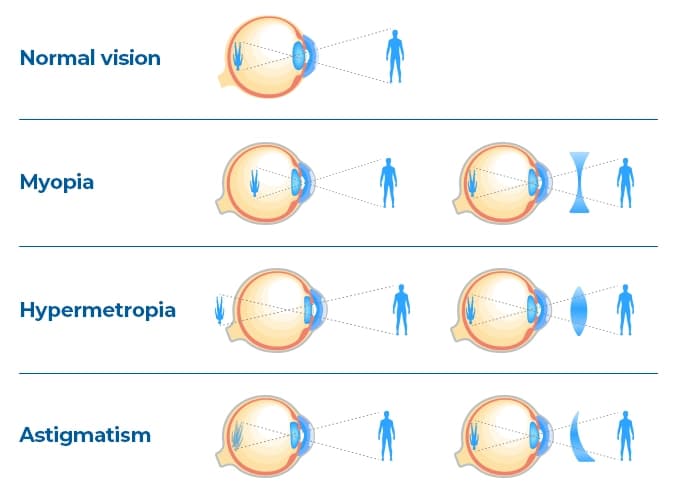
Astigmatism is a condition that affects the eyes and occurs when the cornea or the lens of the eye has an irregular shape. It is relatively common and causes distorted or "blurred" vision.
Symptoms
Symptoms of astigmatism can vary in severity and include:
- Blurred or distorted vision: images may appear blurry or distorted, both near and far
- Eye fatigue: the need to strain the eyes to see clearly can lead to eye fatigue, discomfort, or headaches
- Difficulty seeing at night: astigmatism can cause difficulty seeing clearly in low-light conditions
- Headaches: eye fatigue resulting from the effort to focus can lead to headaches
Causes
Astigmatism occurs when the cornea or the lens of the eye has an irregular shape. This irregularity can be caused by various reasons, and here are some possible causes of astigmatism:
- Genetics: genetic predisposition plays a significant role in the development of astigmatism. If family members have astigmatism, there is a higher likelihood that other generations will also have this eye condition
- Abnormal shape of the cornea: the cornea normally has a smooth and spherical curvature. However, if the cornea is oval-shaped or has an irregular curvature, this can lead to astigmatism
- Abnormal shape of the lens: like the cornea, the lens also plays a role in focusing light on the retina. If the lens has an irregular shape, this can contribute to astigmatism
- Eye injuries: traumas, such as injuries or eye surgeries, can alter the shape of the cornea and cause astigmatism
Diagnosis
The diagnosis of astigmatism is made by an ophthalmologist through specific tests. The common steps in this process are:
- Medical history and eye exam: the ophthalmologist may start by gathering information about the patient's medical history, including any visual symptoms, family history of eye problems, and other relevant factors
- Refraction test: this is a crucial part of diagnosing astigmatism. The patient is asked to look through a device called a phoropter, while the ophthalmologist changes lenses to determine the correct prescription to correct any refractive error
- Corneal topography: this is a test to measure the curvature of the cornea, which . is especially useful for identifying the structure of astigmatism
Treatment
The treatment of astigmatism generally involves the use of glasses, contact lenses, or, in more advanced cases, surgical procedures. Here are the common treatment options:
- Glasses: with cylindrical lenses, glasses are often prescribed to correct astigmatism. Cylindrical lenses have different powers in different meridians to compensate for the irregularity in the shape of the cornea or lens
- Contact lenses: are an option to correct the distortions caused by the irregular shape of the eye
- Refractive surgery: can be an option to permanently correct astigmatism. Laser surgery can be performed to reshape the cornea and correct the irregularities causing astigmatism. Currently, lens implants can also be performed to correct astigmatism
Prevention
Astigmatism is largely a visual condition resulting from genetic factors and the irregular shape of the cornea or lens. Therefore, there is no direct way to prevent it. However, it is possible to adopt practices to maintain overall eye health and reduce the risk of visual problems:
- Regular eye exams: are used for early detection of any visual problems, including astigmatism
- Eye protection: wear appropriate protective eyewear during activities that may pose risks to the eyes, such as sports, working with chemicals, or any situation where there is a danger of eye injury
- Eye hygiene: maintain good eye hygiene, wash hands before touching the eyes, and avoid sharing personal items that come into contact with the eyes
- Avoid excessive eye rubbing: as this can accelerate the progression of astigmatism
- Eye rest: avoid prolonged use of electronic devices and take regular breaks to rest the eyes during long periods of reading or computer work
References
Secretaria da Educação [Department of Education]
You may also like to read about
Hyperopia: a vision problem where nearby objects appear blurry – the opposite of what happens in cases of myopia
Cataract: One of the leading causes of blindness in the world, cataracts are characterized by the progressive loss of transparency of the lens
Conjunctivitis: inflammation of the conjunctiva, that is, the thin, transparent membrane that covers the white part of the eye and the inner surface of the eyelids