
Spondylolisthesis
Einstein Health Glossary
ICD 10 - M431

ICD 10 - M431
The spine is our structural support pillar. The lumbar region is responsible for bearing heavy mechanical loads. Failure to support such loads can lead to one vertebra slipping over another. This condition is called spondylolisthesis.
Different factors can cause a vertebra to slip. In adults over 50, this slippage occurs due to degeneration of the disc and joints, mainly affecting the segment between the fourth and fifth lumbar vertebrae.
This is called degenerative spondylolisthesis. Children and adolescents can also develop this condition. In these cases, slippage occurs due to a defect similar to a fracture in a specific region of the vertebra.
This is known as isthmic spondylolisthesis, and it is more common between the last lumbar vertebra and the sacrum. There are also less common types: Congenital, due to birth defects; Traumatic, due to fractures; and Metabolic, resulting from bone diseases that weaken the spine.
Degenerative spondylolisthesis is four times more common in women than in men, with an incidence of about 8% in women and 2% in men. Isthmic spondylolisthesis affects around 4% of children, being more common in boys. In young athletes exposed to high-impact activities, such as gymnasts, the incidence can reach up to 40%.
The main symptoms are: Lower back pain that worsens with movement and leg pain if there is compression of nerve roots. Often, it is the leg pain that leads the patient to seek medical attention, which results in diagnosis. However, the condition is frequently asymptomatic, both in children and adults.
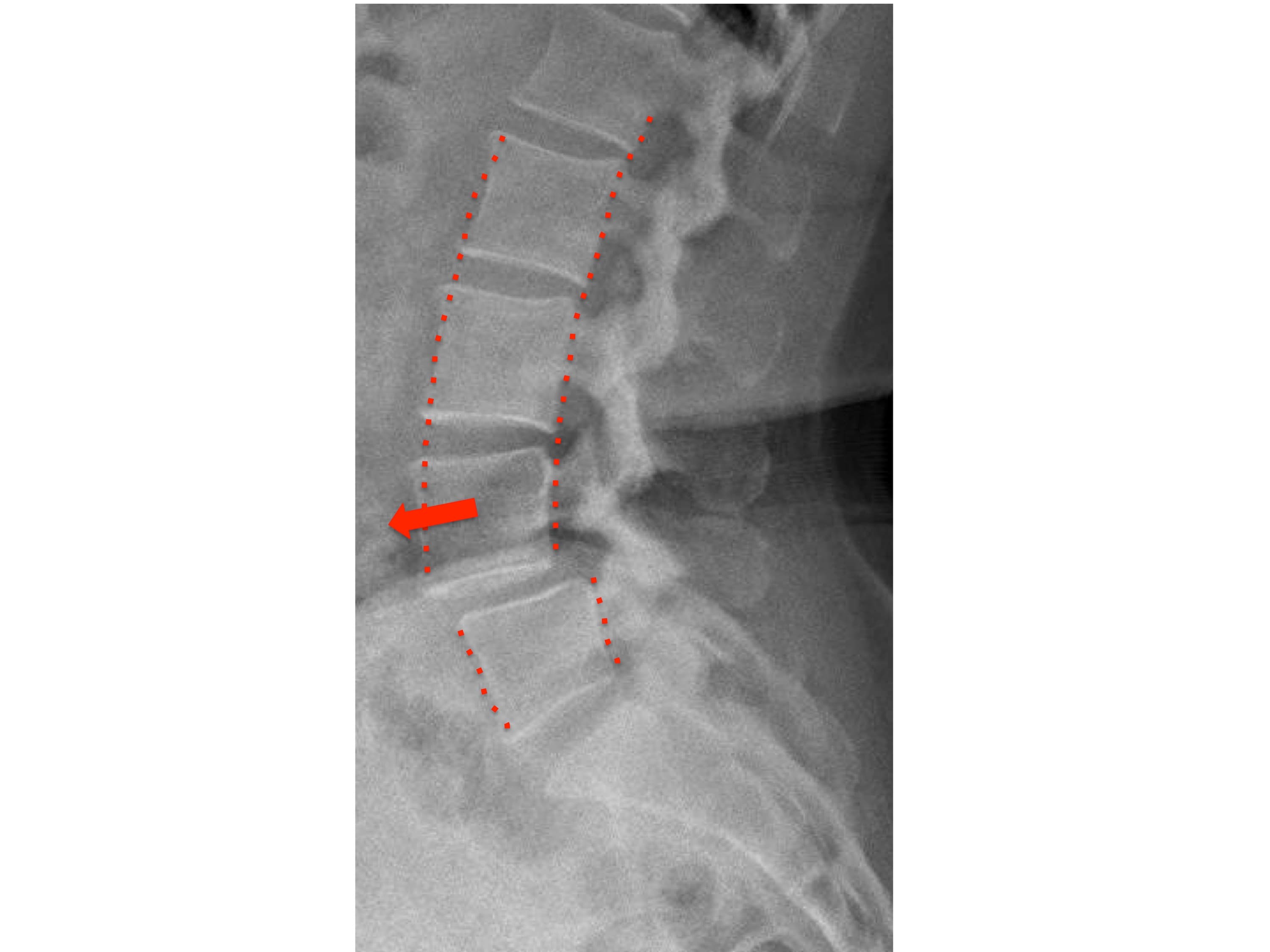
Diagnosis is confirmed through spinal X-rays, which can show the vertebral slippage. Magnetic resonance imaging (MRI) is important for patients with radiating pain in the lower limbs, as it allows direct visualization of the nerve roots and any compressions.
Physical activity to strengthen the core and trunk muscles, maintaining a healthy body weight, and avoiding high-impact activities help in prevention. However, genetic factors are also involved, and there is no way to prevent those.
Spondylolisthesis can be asymptomatic and go unnoticed throughout life. When symptomatic, pain relievers and anti-inflammatory medications can be used during periods of intense pain to reduce symptoms.
Physical therapy, postural correction, and core strengthening exercises are important for both treatment and pain prevention. Limiting certain sports and even using a brace can be helpful for children in the early stages of the disease.
Surgical treatment is recommended when conservative treatment fails, usually in the presence of nerve root compression. Surgery involves repositioning the slipped vertebra and decompressing the nerve roots, often producing excellent results.