
Diverticulitis
Einstein Health Glossary
ICD 10 - K57

ICD 10 - K57
Diverticulitis is a medical condition that involves the inflammation or infection of small pouches or sacs called diverticula, which can form in the walls of the colon (large intestine)
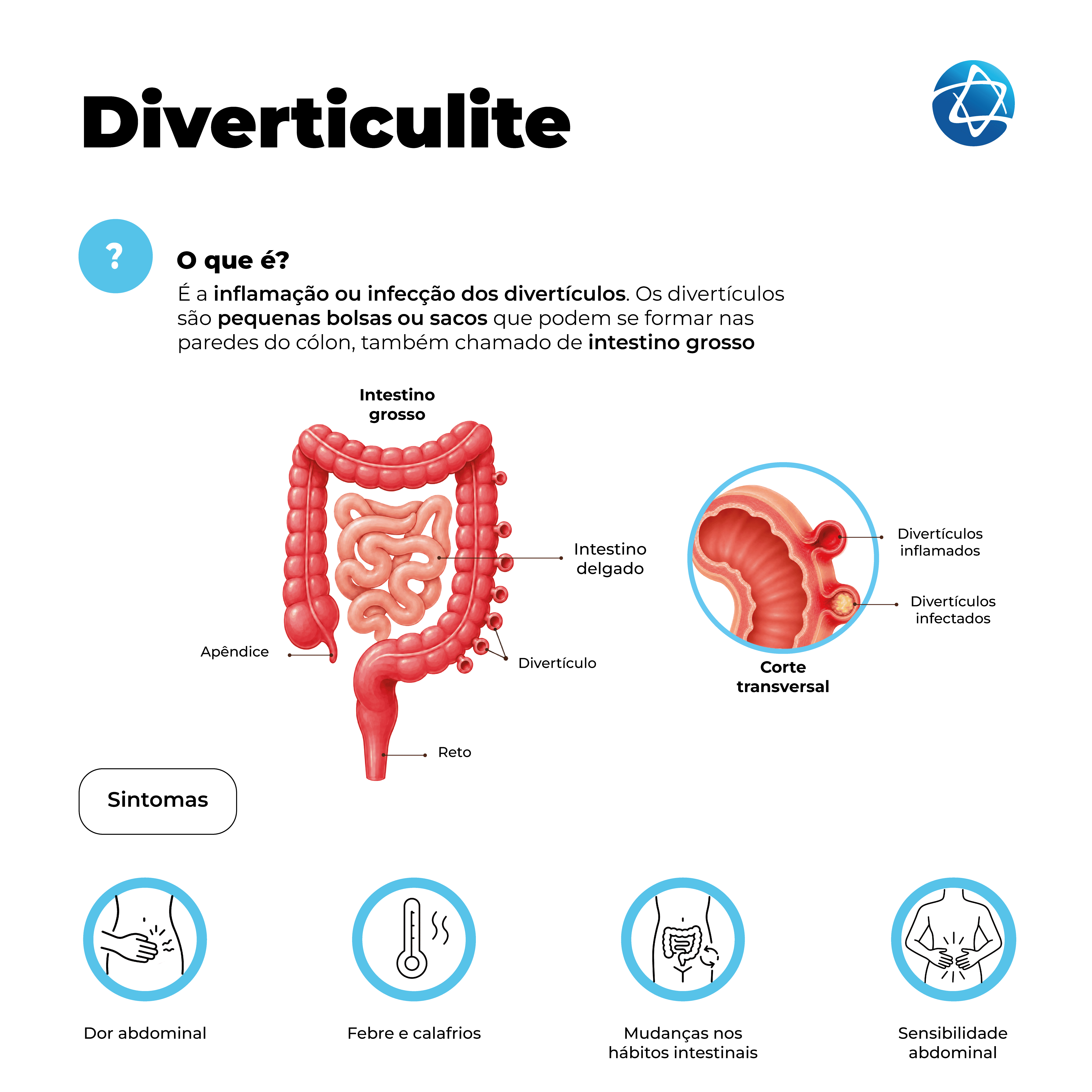
The symptoms of diverticulitis can vary in intensity, and some people may not show obvious symptoms. However, the most common ones include:
The causes of diverticulitis may be linked to:
The diagnosis of diverticulitis usually involves several approaches, such as:
The treatment of diverticulitis may vary depending on the severity of symptoms and the presence of complications. However, it generally includes approaches such as:
The prevention of diverticulitis generally involves adopting healthy lifestyle habits and promoting a healthy intestine, along with strategies such as:
You may also like to read about:

Pain or discomfort in the abdominal region, with varying causes and levels of intensity
Pain or discomfort in the abdominal region, with varying causes and levels of intensity

Malignant tumor in the stomach, which can affect digestion and overall health
Malignant tumor in the stomach, which can affect digestion and overall health

Gastrointestinal disorder that causes changes in bowel habits and abdominal pain
Gastrointestinal disorder that causes changes in bowel habits and abdominal pain
Pain or discomfort in the abdominal region, with varying causes and levels of intensity
Pain or discomfort in the abdominal region, with varying causes and levels of intensity
Malignant tumor in the stomach, which can affect digestion and overall health
Malignant tumor in the stomach, which can affect digestion and overall health
Gastrointestinal disorder that causes changes in bowel habits and abdominal pain
Gastrointestinal disorder that causes changes in bowel habits and abdominal pain