

What is a herniated disc?
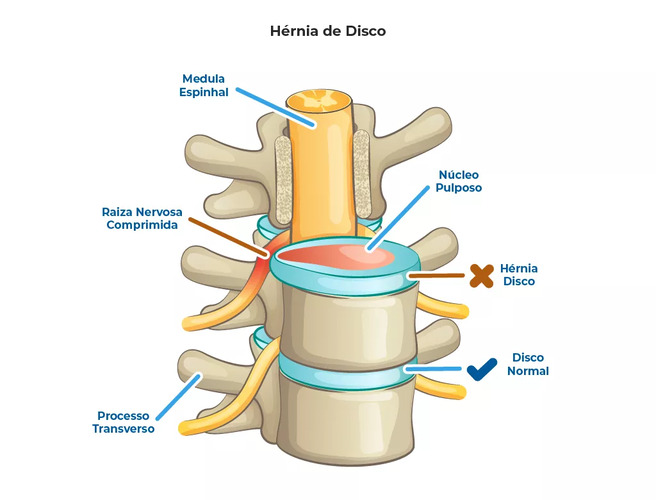
The term “hernia” is used to describe any organ that moves from its original location to another place through an “abnormal” opening. Between the vertebrae are the intervertebral discs—ring-shaped structures that function to prevent friction and absorb impact
Over time, these discs wear down, which facilitates the formation of herniated discs—that is, part of the disc moves out of its normal position and impairs the functioning of the spine. Pain usually appears when the hernia becomes inflamed and presses on the nerve root next to it. If the compression and inflammation are severe, it can damage the function of the nerve root, leading to loss of sensation and weakness in parts of the body
Symptoms
The symptoms of a herniated disc vary depending on its location and the degree of nerve involvement. The most common symptoms include:
- neck pain radiating to an arm or lower back pain radiating to a leg
- numbness or tingling in the affected areas
- muscle weakness in the affected regions
- worsening pain when coughing
Causes
Herniated discs can be caused by a combination of factors:
- aging: Over time, the outer layer of the intervertebral discs loses strength, increasing the risk of rupture and allowing the inner part to leak out and form a hernia
- genetic factors: Certain hereditary traits may make some people more prone to developing herniated discs
- sedentary lifestyle: Leads to muscle loss that supports the spine, causing increased pressure on the disc
- smoking: Accelerates disc wear and aging
- obesity: Increases the load on the disc
Diagnosis
The diagnosis of a herniated disc generally involves the following steps:
- medical history: The orthopedic doctor, neurosurgeon, or physiatrist will ask questions about symptoms, medical history, and recent activities that may be related to back or limb pain
- physical examination: The doctor will look for signs of muscle weakness, numbness, tingling, or decreased sensation in specific areas of the body
- imaging tests: To confirm the diagnosis and assess the extent of the herniated disc, the doctor may order imaging tests such as X-rays or CT scans
Treatment
O tratamento da hérnia de disco geralmente depende da gravidade dos sintomas e da resposta individual do paciente. As opções mais comuns são:
- rest and activity modifications: In mild cases, resting and avoiding activities that worsen symptoms can help with recovery.
Medications: Pain relievers, anti-inflammatory drugs, and muscle relaxants may be prescribed to relieve the pain and inflammation associated with a herniated disc - physical therapy: Strengthening and stretching exercises can help reinforce the back muscles, reduce pressure on the discs, and improve flexibility and posture
- alternative therapies: Some people find pain relief through alternative therapies such as acupuncture, chiropractic care, or osteopathic manipulation
- surgery: In severe cases involving neurological damage or when other treatments are ineffective, surgery may be considered to remove part of the herniated disc and relieve pressure on the spinal nerves. Surgical options include discectomy, laminectomy, or spinal fusion
The specific treatment recommended for a herniated disc will be determined by the physician based on the severity of the symptoms, the patient’s overall health, and other individual factors
Prevention
Although it is not always possible to completely prevent a herniated disc, some measures can reduce the risk of developing one:
- maintain proper posture: when sitting, standing, and lifting objects. This can help reduce pressure on the spine and intervertebral discs
- ergonomics: use an appropriate chair and desk, and take short breaks every 40–50 minutes
- muscle strengthening: do exercises to strengthen the muscles of the abdomen, back, and pelvis
- safe lifting: when lifting heavy objects, bend your knees and keep your back straight, avoiding twisting your body
- no smoking: smoking can damage the spinal discs, increasing the risk of injury
References
Herniated Disc | Virtual Health Library – Ministry of Health (Brazil)
Saúde e Bem-Estar
Leia conteúdos sobre saúde e amplie seu conhecimento

Condição Cervical Hernia:
when the intervertebral disc, a kind of cushion between the vertebrae, shifts from its normal positi [...]
when the intervertebral disc, a kind of cushion between the vertebrae, shifts from its nor [...]

Sintoma Low Back Pain (Lumbalgia):
commonly used medical term to describe any type of pain in the lower back
commonly used medical term to describe any type of pain in the lower back

Doença Spondylolisthesis:
the spine is our structural support pillar. The lumbar region is responsible for bearing heavy mecha [...]
the spine is our structural support pillar. The lumbar region is responsible for bearing h [...]

Cervical Hernia:
when the intervertebral disc, a kind of cushion between the vertebrae, shifts from its normal positi [...]
when the intervertebral disc, a kind of cushion between the vertebrae, shifts from its nor [...]

Low Back Pain (Lumbalgia):
commonly used medical term to describe any type of pain in the lower back
commonly used medical term to describe any type of pain in the lower back

Spondylolisthesis:
the spine is our structural support pillar. The lumbar region is responsible for bearing heavy mecha [...]
the spine is our structural support pillar. The lumbar region is responsible for bearing h [...]