

What is a ligament rupture?
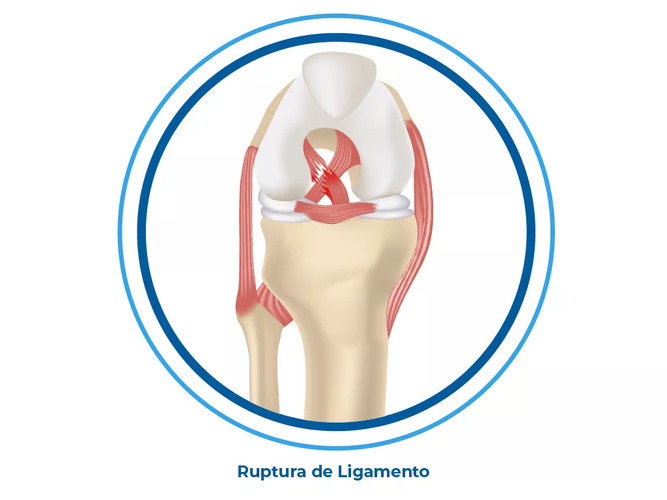
Ligaments are fibrous structures responsible for stabilizing joints by connecting bones to one another. They provide stability and limit the range of motion of the joints. When ligaments are stretched beyond their normal capacity, they can suffer partial or complete tears. When completely ruptured, joint stability is compromised, which can lead to symptoms such as pain, swelling, instability, and loss of function
Symptoms
Os sintomas de uma ruptura de ligamento podem variar dependendo da articulação afetada e da gravidade da lesão:
- severe pain: often felt immediately after the injury. The intensity may vary, but it is frequently described as sharp and intense pain in the affected joint
- swelling: common after a ligament rupture due to the accumulation of blood in the injured area
- joint instability: the joint may feel loose or unstable, making it difficult to perform normal movements
- difficulty bearing weight: in ligament injuries involving weight-bearing joints, such as the knees or ankles, it may be difficult to support weight on the affected joint due to pain and instability
Causes
Ligament ruptures can occur due to various factors, with acute trauma being one of the most common causes. Some of the main causes include:
- direct trauma: a violent impact or collision can cause a ligament rupture. This may happen in car accidents, falls from height, or sports injuries where the joint is subjected to sudden and intense force
- excessive twisting: sudden movements that force the joint beyond its normal range of motion can stretch or tear the ligaments. For example, a quick and unexpected twist during sports activities can result in a ligament rupture
- hyperextension: when the joint is extended beyond its normal range of motion. This can occur, for instance, during a poorly landed jump or an “arm lock” maneuver that leads to elbow hyperextension
Diagnosis
Diagnosing a ligament rupture typically involves a combination of:
- medical history: to understand the symptoms, the mechanism of injury, when and how it occurred, and the presence of any additional risk factors
- physical examination: the affected joint will be evaluated for pain, swelling, deformity, instability, range of motion, and tenderness
- imaging tests: such as X-rays, which, although they do not directly show ligament ruptures, are often performed to rule out bone fractures associated with the injury. They can also help identify indirect signs of ligament damage, such as joint misalignment
Treatment
Treatment for a ligament rupture may vary depending on the severity of the injury, the affected joint, and the individual needs of the patient. Common treatment options include:
- rest: essential to allow the ligament to heal. Avoiding activities that place excessive stress on the affected joint can help prevent further damage
- ice: can help reduce pain, swelling, and inflammation. It is recommended to apply ice for a few minutes during the first few days after the injury
- immobilization: provides additional protection to the injured area and supports healing
- physical therapy: plays a key role in the recovery from a ligament rupture. An individualized physical therapy program can help restore range of motion, strengthen the muscles around the joint, improve stability, and promote full recovery
- medications: can help relieve pain and inflammation associated with the injury. However, it is important to use these medications under medical supervision and follow proper dosage instructions
- surgery: may be indicated in specific cases of ligament injuries, such as anterior cruciate ligament (ACL) tears or Bankart lesions in the shoulder following dislocation
Prevention
Preventing ligament ruptures is essential to reduce the risk of joint injuries and maintain long-term joint health. Some important prevention strategies include:
- muscle strengthening: strengthening the muscles around the joints can help stabilize them and reduce the risk of injury
- fexibility and stretching: help reduce the risk of injury. Incorporating regular stretching routines before and after exercise can help maintain flexibility and prevent joint stiffness
- proper technique: when practicing sports or physical exercises, it is important to use proper techniques to avoid injuries. This includes learning the correct technique for the activity being performed—correcting movement patterns is important not only to prevent injuries but also to improve performance. Avoiding sudden or excessive movements and using protective equipment when appropriate are also key to preventing unwanted injuries
- proper warm-up: before exercising, warming up helps prepare the muscles and joints for physical activity, reducing the risk of injury. This may include cardiovascular and dynamic warm-up exercises, as well as gentle stretching
References
Saúde e Bem-Estar
You may also be interested in reading about:

Condição Anterior Cruciate Ligament (ACL) Injury:
difficulty performing certain physical activities, especially those that require quick movements and [...]
difficulty performing certain physical activities, especially those that require quick mov [...]

Doença Muscular Dystrophy:
a group of genetic diseases that cause progressive weakness and loss of muscle mass. The most common [...]
a group of genetic diseases that cause progressive weakness and loss of muscle mass. The m [...]

Condição Toe Fractures:
fractures of the toe bones are very common. These bones are called phalanges
fractures of the toe bones are very common. These bones are called phalanges

Anterior Cruciate Ligament (ACL) Injury:
difficulty performing certain physical activities, especially those that require quick movements and [...]
difficulty performing certain physical activities, especially those that require quick mov [...]

Muscular Dystrophy:
a group of genetic diseases that cause progressive weakness and loss of muscle mass. The most common [...]
a group of genetic diseases that cause progressive weakness and loss of muscle mass. The m [...]

Toe Fractures:
fractures of the toe bones are very common. These bones are called phalanges
fractures of the toe bones are very common. These bones are called phalanges