

What is a muscle injury?
A muscle injury occurs when muscle fibers suffer some type of damage. This usually happens due to excessive physical effort, which can cause the fibers to stretch or contract beyond their capacity. This situation can cause significant pain and movement limitations, as well as impact sports activity
Muscles are essential for body movement, as they are responsible for generating force. Proper treatment is essential for effective and complete recovery
Symptom
Symptoms vary depending on the severity of the injury. Therefore, it is important to seek medical attention for a proper evaluation in the presence of the following signs:
- localized pain and swelling
- muscle weakness
- localized deformity and bruising (purple discoloration)
Causes
Injuries can occur for different reasons, such as:
- overload: when muscles are subjected to a greater load than they can handle, either due to intense or repetitive exercises
- sudden movements: abrupt or improper movements can lead to muscle strains and tears
- training errors: warming up is essential to prepare the muscles before physical activity, as is proper training planning
lack of physical conditioning, nutritional imbalances - genetic factors: some people may have a genetic predisposition to certain types of muscle injuries
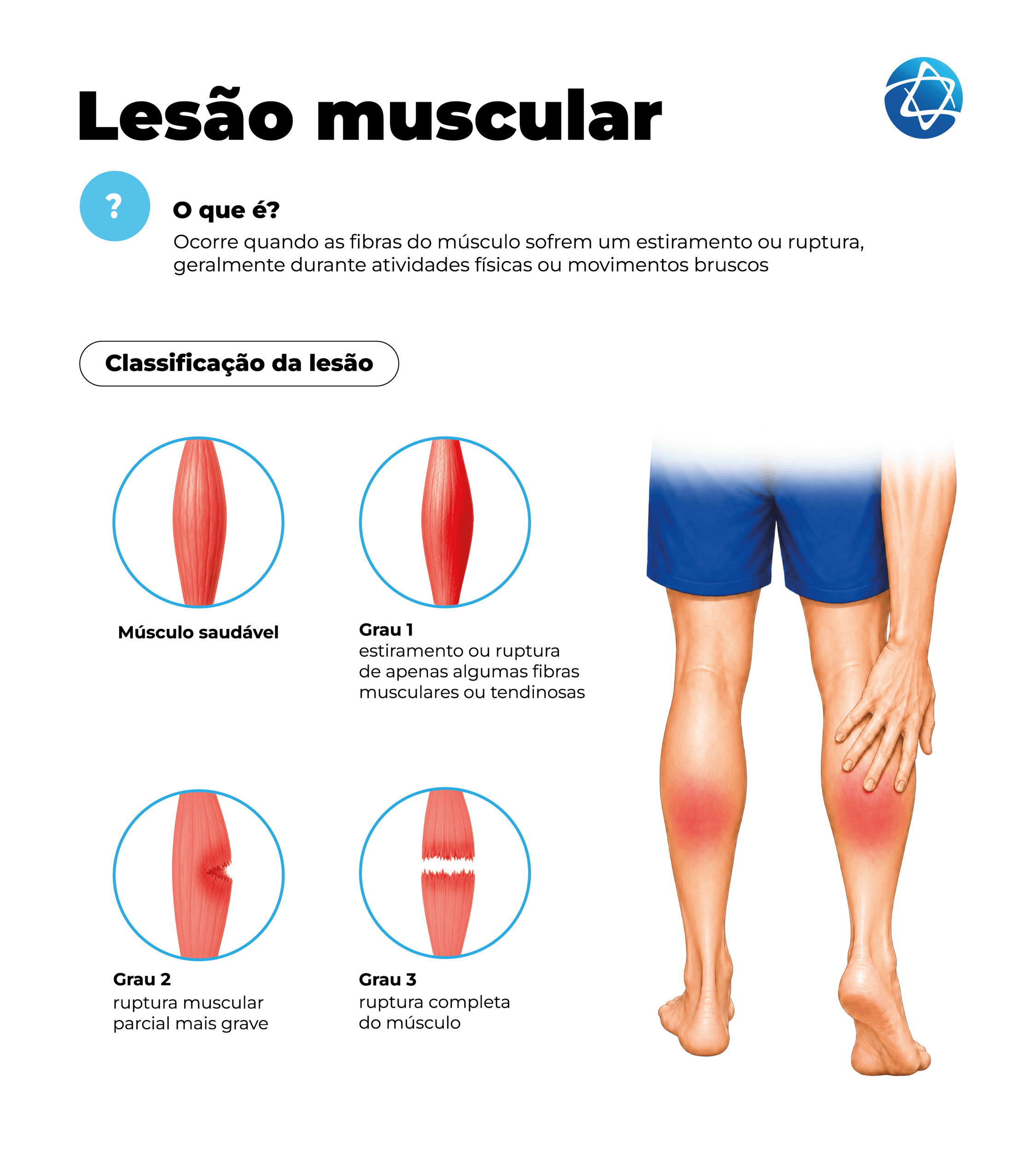
Classification
- grade I (mild): slight stretching or tearing of a few muscle fibers with mild pain and minimal loss of strength. There may be swelling and tenderness, but movement is still possible, though uncomfortable
- grade II (moderate): more significant tearing of muscle fibers. The patient may experience moderate pain, swelling, bruising, and partial loss of strength and function. Movement may be limited and painful
- grade III (severe): complete rupture of the muscle or separation of the muscle from the tendon. This injury causes intense pain, significant swelling, extensive bruising, and an almost total loss of function in the affected muscle
Diagnosis
Diagnosis is made after a detailed clinical history of the trauma, followed by a physical examination by a healthcare professional. Tests such as ultrasound and magnetic resonance imaging may be requested for better understanding, assessment of the injury, and to guide therapeutic decisions
Treatment
Treatment varies according to the severity of the injury. Here are some common approaches:
- rest: resting the muscle is essential to avoid worsening the injury
- ice: applying ice to the affected area helps reduce swelling, relieve pain, and decrease inflammation
- physical therapy: aims to reduce pain, assist in healing, and provide a recovery program
- rehabilitation: gradually reintroducing physical activity is important in severe injuries for a safe return to daily activities
- surgery: in severe, uncommon, and specific cases, surgery may be necessary to repair the torn muscle tissue
Prevention
Prevention is key to maintaining muscle health and avoiding injuries during physical activity. Some important strategies include:
- warm-up: stretching before any physical activity is essential to prepare the muscles
- rest: maintaining a rest routine with good sleep quality so muscles can regenerate
- symptom awareness: paying attention to symptoms to avoid worsening a mild injury
- treatment of intrinsic predisposing factors: correcting muscle imbalances and stretching deficiencies
- proper training: following personalized training plans according to your needs and limitations to avoid overloading the body
- use of appropriate equipment
- nutritional guidance and proper hydration
References
Ministry of Health
National Institute of Traumatology and Orthopedics
Saúde e Bem-Estar
You may also like to read about:

Doença Muscular dystrophy:
a group of genetic diseases that cause progressive weakness and loss of muscle mass. The most common [...]
a group of genetic diseases that cause progressive weakness and loss of muscle mass. The m [...]

Condição Spinal spasm:
a term for involuntary muscle contraction, usually accompanied by pain. Muscle spasms can occur in a [...]
a term for involuntary muscle contraction, usually accompanied by pain. Muscle spasms can [...]

Condição Anterior cruciate ligament (ACL) injury:
patients with a tear in this ligament often have difficulty performing certain physical activities
patients with a tear in this ligament often have difficulty performing certain physical ac [...]

Muscular dystrophy:
a group of genetic diseases that cause progressive weakness and loss of muscle mass. The most common [...]
a group of genetic diseases that cause progressive weakness and loss of muscle mass. The m [...]

Spinal spasm:
a term for involuntary muscle contraction, usually accompanied by pain. Muscle spasms can occur in a [...]
a term for involuntary muscle contraction, usually accompanied by pain. Muscle spasms can [...]

Anterior cruciate ligament (ACL) injury:
patients with a tear in this ligament often have difficulty performing certain physical activities
patients with a tear in this ligament often have difficulty performing certain physical ac [...]