
Rotavirus
Einstein Health Glossary
ICD 10 - A08.0

ICD 10 - A08.0
Rotavirus is a virus that causes gastroenteritis, a common gastrointestinal infection in infants and young children, although it can also affect adults. It is one of the leading causes of severe diarrhea worldwide
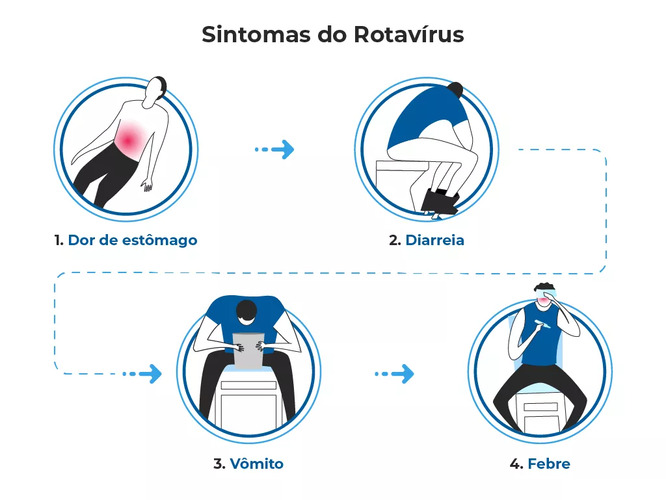
Rotavirus symptoms can range from mild to severe and usually develop within 1 to 3 days after exposure to the virus
Rotavirus is caused by a virus of the Rotavirus genus, from the Reoviridae family. There are several different types of rotavirus, classified into groups A, B, C, and D, with group A being the most common and responsible for most human infections. The main modes of transmission include:
Diagnosis of rotavirus infection is usually based on the patient’s clinical symptoms and, in some cases, confirmed by specific laboratory tests. To identify rotavirus infection, the following can be done:
O tratamento da infecção por rotavírus geralmente se concentra no alívio dos sintomas e na prevenção da desidratação. Aqui estão algumas abordagens comuns:
Preventing rotavirus infection involves a combination of hygiene measures, food safety practices, and immunization:
You may also be interested in reading about:

A viral disease transmitted to humans through the bite of infected mosquitoes, especially Aedes aeg [...]
A viral disease transmitted to humans through the bite of infected mosquitoes, especially [...]

A viral disease transmitted by the bite of mosquitoes from the Aedes genus, with Aedes aegypti bein [...]
A viral disease transmitted by the bite of mosquitoes from the Aedes genus, with Aedes ae [...]

An acute infectious disease with a short incubation period (usually less than 10 days), variable sev [...]
An acute infectious disease with a short incubation period (usually less than 10 days), va [...]
A viral disease transmitted to humans through the bite of infected mosquitoes, especially Aedes aeg [...]
A viral disease transmitted to humans through the bite of infected mosquitoes, especially [...]
A viral disease transmitted by the bite of mosquitoes from the Aedes genus, with Aedes aegypti bein [...]
A viral disease transmitted by the bite of mosquitoes from the Aedes genus, with Aedes ae [...]
An acute infectious disease with a short incubation period (usually less than 10 days), variable sev [...]
An acute infectious disease with a short incubation period (usually less than 10 days), va [...]