

What is esophageal cancer?
Esophageal cancer is a cluster of cells that divide in a disordered manner (tumor) that develops in the organ that connects the mouth to the stomach, being more common in men.
Symptoms
In its early stages, esophageal cancer does not show obvious signs. However, as the disease progresses, some characteristic symptoms include:
- difficulty or pain when swallowing: a sensation of obstruction in the throat
- iron deficiency anemia: recurrent bleeding caused by the tumor can result in anemia. Vomiting with blood or very foul-smelling and dark stools, characteristic of digested blood, may also occur
- weight loss: occurs both due to difficulty eating and a loss of appetite caused by the disease
Most of the time, difficulty swallowing (dysphagia) already indicates the disease is in an advanced stage. It usually starts gradually and first affects the consumption of solid foods, then soft foods, and finally liquids, resulting in significant weight loss.
Risk factors
Several risk factors may be associated with esophageal cancer, although not all are fully understood. There are two main types of esophageal cancer, each with distinct characteristics. They are:
adenocarcinoma: more common in men and in the white population, it is currently the predominant type of esophageal cancer in the Western population. Risk factors include:
- gastroesophageal reflux disease: chronic exposure of the esophageal mucosa to stomach acid is related to the development of a condition called Barrett's esophagus, and also to the development of esophageal adenocarcinoma
- obesity and metabolic syndrome: obese individuals have a higher risk of developing problems such as acid reflux, where stomach acid flows back into the esophagus and causes irritation. Additionally, obesity itself can increase the risk of esophageal cancer by causing inflammation in the body
- smoking: smoking increases the risk of adenocarcinoma, especially in those who already have Barrett's esophagus
Squamous cell carcinoma: formerly more common, it is now less frequent compared to adenocarcinoma. Risk factors include:
- excessive alcohol consumption: heavy intake over a lifetime, especially involving distilled beverages such as brandy and tequila
- smoking: increases the risk synergistically with alcohol consumption. All forms of smoking may be related, such as cigars and pipes, but the risk is higher with cigarettes
- hot beverages: consuming beverages at high temperatures, such as mate, is a risk factor for cancer development and has been reported in countries where this habit is common, such as Brazil, Uruguay, Paraguay, and Argentina
- human papillomavirus (HPV): HPV infection is present in some cases of esophageal squamous cell carcinoma
- medical history: people who have had some type of cancer with similar risk factors are more likely to develop the disease. The presence of achalasia (a condition in which the esophagus cannot contract to push food into the stomach) or the hereditary syndrome tylosis (a rare disease characterized by thickening of the skin on the hands and feet) can also increase the risk
Diagnosis
The diagnosis of esophageal cancer is made through the following approach:
- upper endoscopy: an exam that allows visualization of the inside of the esophagus and the collection of samples to confirm the diagnosis
- endoscopic ultrasound: an exam that combines ultrasound and a camera attached to a thin, flexible tube inserted through the mouth, allowing detailed images of the inside of the body
- laryngoscopy: a procedure that uses a thin tube with a camera at the tip to view and examine the throat and airways
- contrast-enhanced computed tomography (CT scan): an exam that uses X-rays and a special dye injected into the bloodstream to obtain detailed images of internal organs
- PET/CT-FDG18: combines two types of imaging exams simultaneously to provide detailed information about the location and extent of the tumor
Treatment
Treatment may vary depending on the type of cancer, its location in the esophagus, and the stage of the disease. A treatment approach that uses multiple strategies has a higher chance of long-term success, including:
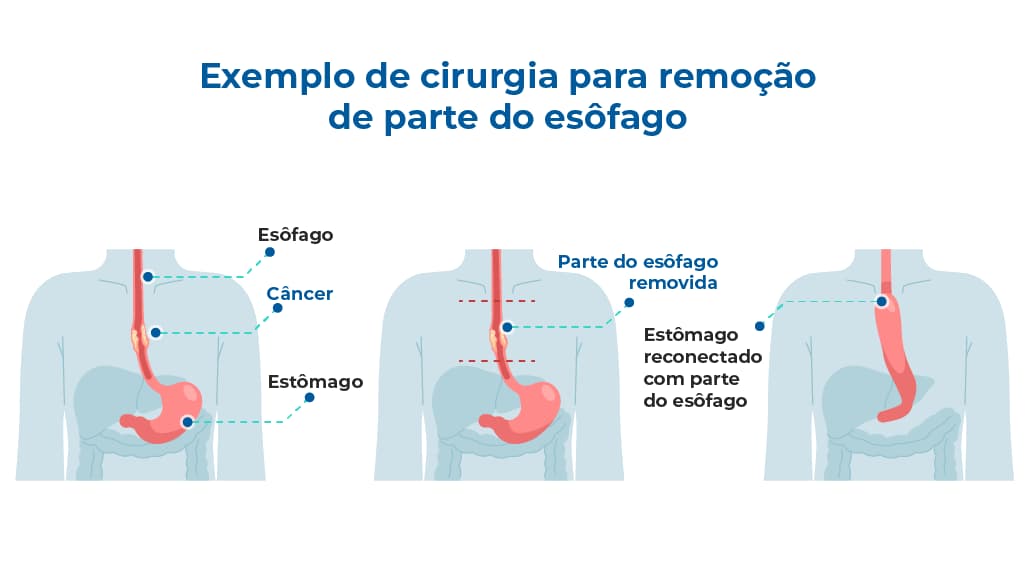
- surgery: an essential method for the complete removal of cancer, used when the tumor is in its early stages
- endoscopic resection: removal of the tumor through the mouth, without the need for incisions, indicated for early-stage tumors
- radiotherapy: the use of radiation to destroy or prevent cancer cells from spreading. It can be performed in combination with chemotherapy, as the main form of treatment or prior to surgery
- chemotherapy: the use of drugs to eliminate cancer cells. It can be done alone or combined with other treatment strategies
Prevention
The main risk factors are:
- smoking: smoking is the leading cause of esophageal cancer
- maintaining a healthy lifestyle: avoiding alcohol consumption, maintaining the weight recommended by a healthcare professional, and adopting a diet rich in proteins (found in meat and eggs, for example), vegetables, and fruits are measures that strengthen the body and help prevent the disease
- avoiding hot beverages: it is necessary to avoid consuming very hot drinks, preferring to drink them at room temperature
References
National Cancer Institute, 2022
You may also be interested in reading about:
Cancer: a disease characterized by the uncontrolled growth of abnormal cells in the body [...]
Liver cancer: a type of cancer that originates in the liver cells, a vital organ for detoxification and metabolism in the body [...]
Gastroesophageal reflux disease: a digestive condition in which acids produced by the stomach involuntarily and repeatedly flow back into the esophagus, causing irritation of the lining of the food pipe [...]
While browsing the Health Glossary, there are pages that explain syndromes, disorders, and other conditions that are not considered diseases, but appear there to help you understand health-related terms. The information on these pages does not replace consultation with a qualified healthcare professional.