
Intestinal Worms
Einstein Health Glossary
ICD 10 - B65-B83

ICD 10 - B65-B83
Intestinal worms are parasites that inhabit the human intestine, where they feed and reproduce. They vary in size, ranging from microscopic to several centimeters long. These parasites are responsible for diseases such as ascariasis (commonly known as roundworm) and taeniasis (known as tapeworm). Transmission mainly occurs through the ingestion of contaminated food or water, as well as direct contact with infected feces.
Symptoms of intestinal worms depend on the severity of the infection and the type of worm present in the body. Hookworm, caused by Necator americanus, for example, leads to anemia, while tapeworms can cause loss of appetite. Some individuals may show no symptoms, making diagnosis difficult. However, common symptoms, which may appear alone or in combination, include:
More severe symptoms may include intestinal obstruction, which occurs when worms block the intestine and prevent food from passing. In specific cases of some parasitic infections, respiratory problems (such as shortness of breath) and neurological symptoms in cases of cysticercosis (such as fainting or loss of strength in arms or legs) may occur.
There are several types of intestinal worms with different modes of transmission. The most common include:
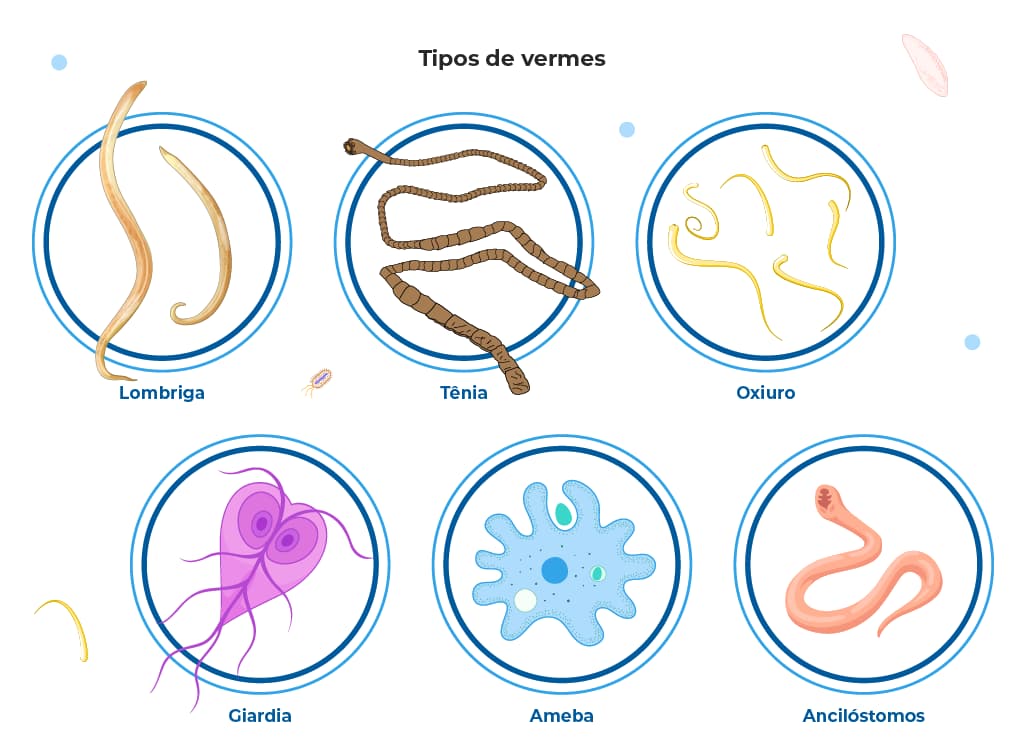
Diagnosis of intestinal worms is primarily done through stool tests, which detect eggs, cysts, or the parasites themselves. In some cases, blood tests and imaging exams such as X-rays, CT scans, and MRIs are necessary to identify complications or infections outside the intestine.
Treatment for intestinal worms may involve antiparasitic medications specific to each type of worm. It is important to follow medical prescriptions, and various specialties may be consulted, including general medicine, pediatrics, infectious diseases, gastroenterology, or proctology. Treatment is usually extended to all family members to prevent reinfection. In cases of anemia, iron supplementation may be required.
To prevent parasitic infections, adopt the following measures:
Brazilian Society of Pediatrics
Brazilian Society of Family and Community Medicine
Ministry of Health – Giardiasis
Read health-related content and expand your knowledge

Take care when storing food at the beach, avoid items that require refrigeration and check the vendo [...]
Take care when storing food at the beach, avoid items that require refrigeration and check [...]

Watch the video Dr. Answers: everything you need to know about intestinal health. This is a series f [...]
Watch the video Dr. Answers: everything you need to know about intestinal health. This is [...]

Learn more about balanced nutrition and how to improve your well-being
Learn more about balanced nutrition and how to improve your well-being
Take care when storing food at the beach, avoid items that require refrigeration and check the vendo [...]
Take care when storing food at the beach, avoid items that require refrigeration and check [...]
Watch the video Dr. Answers: everything you need to know about intestinal health. This is a series f [...]
Watch the video Dr. Answers: everything you need to know about intestinal health. This is [...]
Learn more about balanced nutrition and how to improve your well-being
Learn more about balanced nutrition and how to improve your well-being