

Spine endoscopy is a minimally invasive technique that enables effective treatment of various conditions affecting the spine, allowing for faster rehabilitation and preservation of surrounding tissues
Spine Endoscopy
What is spine endoscopy?
Endoscopic spine surgery represents a significant advance in treatments for spinal conditions, with a focus on preserving the surrounding tissues. Through a small incision, the surgeon inserts an endoscope equipped with a high-definition camera, allowing precise visualization of the affected area
This technique is particularly indicated for the treatment of herniated discs, spinal stenosis, and other conditions that compress the nerves, causing back pain
To learn more about spine endoscopy, please contact our specialized team:
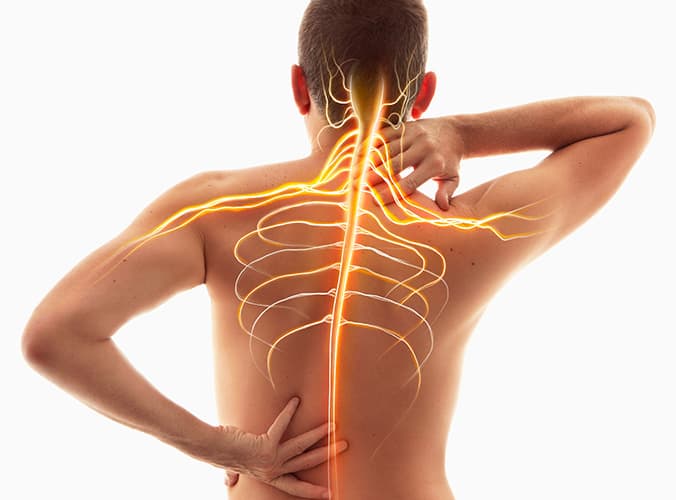
Spine Endoscopy at Einstein
At Einstein, spine endoscopy is performed in our Surgical Centers, which feature modern infrastructure, state-of-the-art equipment, and a highly specialized team in minimally invasive spine techniques
With rigorous safety protocols, our team works with precision at every stage of the procedure, ensuring excellence in care for each patient
How is endoscopic spine surgery performed?
The procedure follows the steps below:
- surgical planning: imaging tests, such as spinal MRI, identify the cause of pain
- anesthesia: the team defines the most appropriate type for each patient
- procedure: the surgeon makes a small incision and inserts the endoscope into the affected area
- treatment: the physician removes the material compressing the nerves, such as herniated disc fragments
In most cases, the patient is discharged on the same day, along with detailed instructions for postoperative care and home recovery. Physical therapy may be recommended to strengthen the spinal muscles and accelerate recovery
Which conditions can be treated with endoscopic spine surgery?
Spine endoscopy is indicated for various conditions, including:
- herniated disc
- spinal canal stenosis
Each case undergoes a detailed evaluation to confirm the indication for endoscopic surgery
Learn more about spine endoscopy
Performed using an endoscope, minimally invasive spine surgery offers several advantages for patients, such as:
- smaller surgical incision
- shorter hospital stay
- significant reduction in blood loss
At Einstein, we have a multidisciplinary team composed of neurosurgeons and orthopedic specialists in minimally invasive spine surgery. Anesthesiologists and nurses are involved at every stage of the procedure.
Einstein’s Locomotor Program coordinates all spine surgeries performed, ensuring integrated care from surgical scheduling through to the rehabilitation phase
Frequently Asked Questions about Spine Endoscopy
What is endoscopic spine surgery?
It is a minimally invasive procedure that allows the treatment of various spinal conditions, such as herniated discs and stenosis. The surgeon makes a small incision to insert an endoscope — a thin tube with a high-definition camera — which provides precise visualization of the affected area, enabling the removal of fragments that compress the nerves, without the need for large incisions
Is spine endoscopy part of minimally invasive spine surgery?
Yes. Spine endoscopy is one of the most advanced techniques within the field of minimally invasive surgery, causing less trauma to the tissues compared to traditional open surgeries
Is spine endoscopy indicated for herniated discs?
Yes. It is one of the main indications, especially for patients who do not respond to conservative treatments such as physical therapy and medication
What is rehabilitation like after spine endoscopy?
Recovery is usually faster than with conventional surgeries. In most cases, the patient is discharged on the same day and can resume light activities within a few days. Physical therapy is recommended to strengthen the muscles and improve spinal stability
Health and Wellness
Read health-related content and expand your knowledge:

Symptoms and conditions What causes back pain? Find out here
Have you ever experienced back pain? The chances are high. A study conducted by a university [...] [...]
Have you ever experienced back pain? The chances are high. A study conducted by a universi [...]

Symptoms and conditions Lower back pain: learn about the types and when to seek help
Experiencing back pain is not exclusive to modern life. It is a discomfort that accompanies [...]
Experiencing back pain is not exclusive to modern life. It is a discomfort that accompanie [...]

Symptoms and conditions Causes and signs of pressure on the spinal cord, known as st [...]
Spinal stenosis is a condition that occurs when the space in the spine narrows, which in turn [...]
Spinal stenosis is a condition that occurs when the space in the spine narrows, which in t [...]

What causes back pain? Find out here
Have you ever experienced back pain? The chances are high. A study conducted by a university [...] [...]
Have you ever experienced back pain? The chances are high. A study conducted by a universi [...]

Lower back pain: learn about the types and when to seek help
Experiencing back pain is not exclusive to modern life. It is a discomfort that accompanies [...]
Experiencing back pain is not exclusive to modern life. It is a discomfort that accompanie [...]

Causes and signs of pressure on the spinal cord, known as st [...]
Spinal stenosis is a condition that occurs when the space in the spine narrows, which in turn [...]
Spinal stenosis is a condition that occurs when the space in the spine narrows, which in t [...]