

What is anxiety?
Anxiety is a natural feeling in humans that allows them to anticipate risky situations and prepare for daily challenges. However, when this emotion becomes very intense, with disproportionate worries about problems and in a continuous manner, it turns into a disorder. This disorder can interfere with rest and trigger specific symptoms.
Symptoms
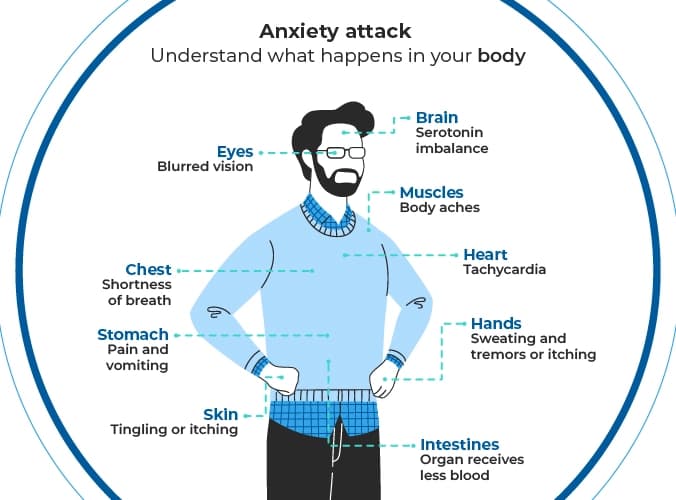
Anxiety disorders present intense symptoms, such as:
- Exaggerated worries, tensions, or fears
- Continuous feeling that a disaster or something very bad will happen
- Extreme fear of an object, being publicly humiliated, or a particular situation
- Lack of control over thoughts, images, or actions, which repeat regardless of one's will
- Dread after a very difficult situation
- Muscle tension
- Intensification or onset of body aches
- Difficulty disconnecting from problems and sleeping
- Changes in bowel function bowel
Diagnosis
The diagnosis of anxiety is usually made by a psychiatrist or psychologist. The process involves a careful assessment of symptoms, medical history, and information about the patient's life. Common steps for diagnosing anxiety include:
- Initial assessment: the first step is an initial conversation between the patient and the mental health professional. During this assessment, the patient is encouraged to discuss their symptoms, concerns, medical history, family history, and any stressful life events
- Physical exam and laboratory tests: to rule out medical causes underlying anxiety symptoms, the healthcare professional may perform a physical exam and request laboratory tests, such as blood tests, to check for other medical conditions contributing to the symptoms
- Diagnostic criteria: the diagnosis of anxiety is based on criteria established in diagnostic manuals in the field. To be identified as an anxiety disorder, symptoms must meet specific criteria, such as duration and severity of symptoms
- Psychological evaluation: in some cases, a more detailed psychological evaluation may be conducted to assess specific aspects of anxiety and other mental conditions
Treatment
There are three main types of treatment for anxiety disorders:
- Medications (always with medical supervision and indication)
- Psychotherapy with a psychologist or psychiatrist
- Combination of both treatments (medications and psychotherapy)
The vast majority of people with an anxiety disorder start to feel better and resume their activities after a few weeks of treatment. Therefore, it is important to seek specialized help.
Depending on the causes involved, such as personality development factors, traumas, and crises, the most appropriate approach is to seek psychotherapy. If the disorder has a physiological origin, called “biological anxiety,” a psychiatrist should be consulted.
Prevention
To prevent anxiety from becoming a disorder, with specific disease symptoms, some quality of life measures can help, such as:
- Daily physical exercise
- Balanced, nutritious, and high-quality diet
- Taking care of sleep quality
- Relaxation techniques
- Leisure
References
CORREA, André Ricardo et al. Exercício físico e os transtornos de ansiedade e depressão [Physical exercise and anxiety and depression disorders]. Revista Faculdades Do Saber, v. 7, n. 14, p. 1072-1078, 2022.
CRUZ REBOUÇAS, Francília et al. A influência da nutrição no tratamento e prevenção dos transtornos mentais: ansiedade e depressão [The influence of nutrition on the treatment and prevention of mental disorders: anxiety and depression]. Research, Society and Development, v. 11, n. 15, 2022.
FROTA, Ilgner Justa et al. Transtornos de ansiedade: histórico, aspectos clínicos e classificações atuais [Anxiety disorders: history, clinical aspects, and current classifications]. Journal of Health & Biological Sciences, v. 10, n. 1, p. 1-8, 2022.
You may also like to read about:
Stress: a natural reaction of the body that occurs when we experience situations of danger or threat
Atrial tachycardia: presence of abnormal electrical activity originating in one or more foci in the atrial myocardium. In adults, it usually occurs with heart disease or associated chronic obstructive pulmonary disease (COPD)
Ventricular tachycardia: acceleration of heartbeats originating in the lower chambers of the heart (ventricles). Ventricular tachycardia can, in some situations, impair heart function, resulting in a sensation of palpitations, dizziness, and even fainting