

What is asthma?
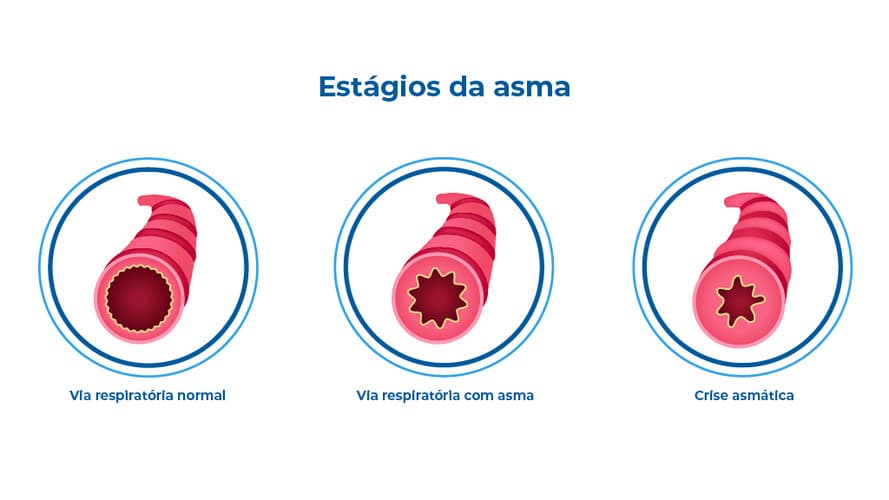
Asthma, previously known as asthmatic bronchitis, is a respiratory disease that causes the airways (bronchi) that carry air in and out of the lungs to become inflamed and narrowed. This makes it difficult for air to pass through and prevents the person from breathing normally.
This disease can be controlled with treatment and the practice of appropriate preventive measures. Therefore, medical follow-up is always essential.
Symptoms
The intensity and frequency of asthma symptoms vary from person to person. The most common are:
- shortness of breath (dyspnea): the airways through which air passes to enter and exit the lungs (bronchi) become inflamed and narrowed, making it difficult for air to pass through and causing the person to feel breathless and have difficulty breathing.
- chest wheezing: air is forced to pass through a narrow space, generating a sound similar to a whistle that seems to come from the chest
- persistent cough: sometimes, the cough is the only symptom of asthma, especially in children, generally increasing at night and may be accompanied by phlegm (secretion). If it becomes very strong, it can cause vomiting, especially after physical activities or in the case of an infection
- chest tightness upon waking: it can be a sign of nocturnal asthma, when symptoms manifest or worsen during the night
- asthma attacks: these are moments when asthma symptoms become much stronger, as the airways that carry air to the lungs become even more inflamed than usual
Causes
Asthma is an allergic disease. The risk factors related to the disease are:
- genetic factors: a person is more likely to have asthma when close family members have the disease. However, it is not guaranteed that the child of someone with asthma will also have the disease
- allergies: other allergic conditions, such as rhinitis, can increase the risk of asthma
- external factors: contact with dust, animal hair, feathers, and even air pollution can cause an asthma attack
- viral respiratory infections: some children who suffer from respiratory diseases caused by viruses (viral respiratory infections) develop asthma
- smoking: cigarette smoke irritates the airways, which can cause or worsen asthma symptoms. Children of smoking parents, as well as smoking during pregnancy, can also increase the chances of the baby having the disease
Medical follow-up, preventive measures, and appropriate treatment are important to prevent asthma symptoms from becoming very strong and to provide greater comfort and well-being to the patient.
Diagnosis
Asthma diagnosis is generally based on a combination of the following factors:
- physical examination: the healthcare professional uses a device (stethoscope) to listen to the lungs and look for strange sounds, such as wheezing. They may also gently tap and feel the patient's chest to detect any changes in the area
- medical history evaluation: the healthcare professional evaluates the symptoms and collects information about possible factors that trigger the attacks, as well as their intensity and frequency
- spirometry: also known as a pulmonary function test, it is performed with a device called a spirometer. This test measures how much air the person can inhale and exhale, and the speed of air exhalation
Identifying asthma can be more difficult in childhood, a period when several diseases can cause wheezing, such as the wheezing baby syndrome, which occurs in children up to two years old.
In the elderly, asthma can be confused with other conditions, such as chronic obstructive pulmonary disease (COPD) and congestive heart failure (CHF), which have similar symptoms.
Treatment
To effectively treat asthma, the patient needs to identify and avoid the factors that cause trigger the attacks and follow medical guidelines correctly. Some strategies that help keep asthma symptoms under control are:
- relief medications: should be used during an attack, as they help open the airways so that air can pass through and reach the lungs
- corticosteroids (commonly known as "cortisonessteroids"): medications that reduce inflammation in the airways (bronchi), making breathing easier
- preventive medications: prevent asthma attacks and should be used daily as long-term treatment, not just during an attack
Since asthma is a respiratory disease, it is best to use medications that deliver air directly to the lungs (inhaled medications), such as inhalers, nebulizer solutions, or dry powder inhalers.
Prevention
The best way to prevent asthma or its attacks is to recognize and avoid risk factors. Some of the most effective strategies are:
- avoid triggers: reduce contact with things that can cause asthma attacks, such as dust, animal hair and feathers, pollen, mites, mold, cleaning products, perfumes, and places with highly polluted air
- do not smoke and avoid cigarette smoke: people with asthma who smoke should quit immediately. Those who do not smoke should avoid places with a lot of cigarette smoke, as this can worsen the symptoms of the disease
- engage in physical activities: the patient with asthma can be encouraged to exercise, as long as they respect their limits and the intensity recommended by the healthcare professional. Generally, daily medication is sufficient to prevent attacks during exercise. If an attack occurs, using the inhaler helps protect the person for at least two hours
References
Health and Well-being
Read health content and expand your knowledge

Disease Chronic bronchitis: what it is and symptoms
Group of conditions known as chronic obstructive pulmonary diseases (COPD)
Group of conditions known as chronic obstructive pulmonary diseases (COPD)

Condition Silent pneumonia: diagnosis and treatment
Respiratory condition that does not present the common signs and symptoms of the disease
Respiratory condition that does not present the common signs and symptoms of the disease

Disease What is tuberculosis
Infectious disease that affects the lungs and causes persistent cough, fever, and night sweats
Infectious disease that affects the lungs and causes persistent cough, fever, and night sw [...]

Chronic bronchitis: what it is and symptoms
Group of conditions known as chronic obstructive pulmonary diseases (COPD)
Group of conditions known as chronic obstructive pulmonary diseases (COPD)

Silent pneumonia: diagnosis and treatment
Respiratory condition that does not present the common signs and symptoms of the disease
Respiratory condition that does not present the common signs and symptoms of the disease

What is tuberculosis
Infectious disease that affects the lungs and causes persistent cough, fever, and night sweats
Infectious disease that affects the lungs and causes persistent cough, fever, and night sw [...]