
Oropouche Fever
;
ICD 10 - A93.0

ICD 10 - A93.0
Oropouche Fever is an infectious disease caused by the Oropouche virus, from the Orthobunyavirus genus. The virus was first isolated in Brazil in the 1960s, mainly in the Amazon region. Recently, it has been detected more frequently in several states due to increased availability of diagnostic tests.
Although often mistaken for dengue due to similar symptoms, its main vector is the Culicoides paraensis mosquito, also known as maruim or biting midge, which breeds in stagnant water and can be found in both wild and urban areas.
Symptoms of Oropouche Fever include:
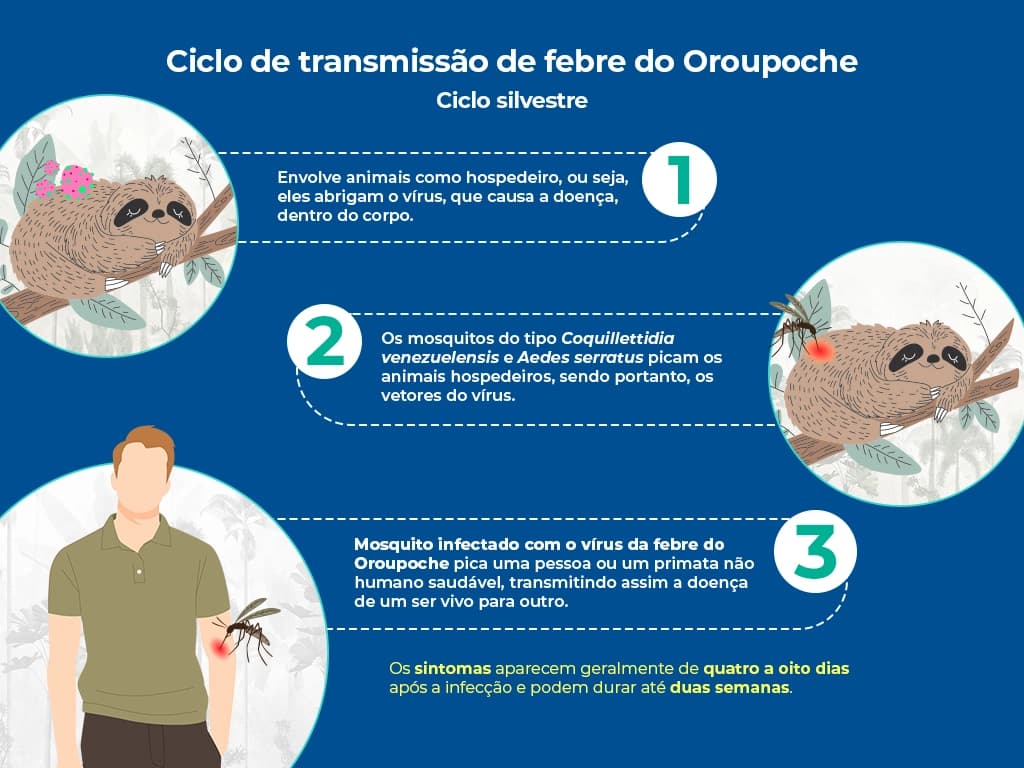
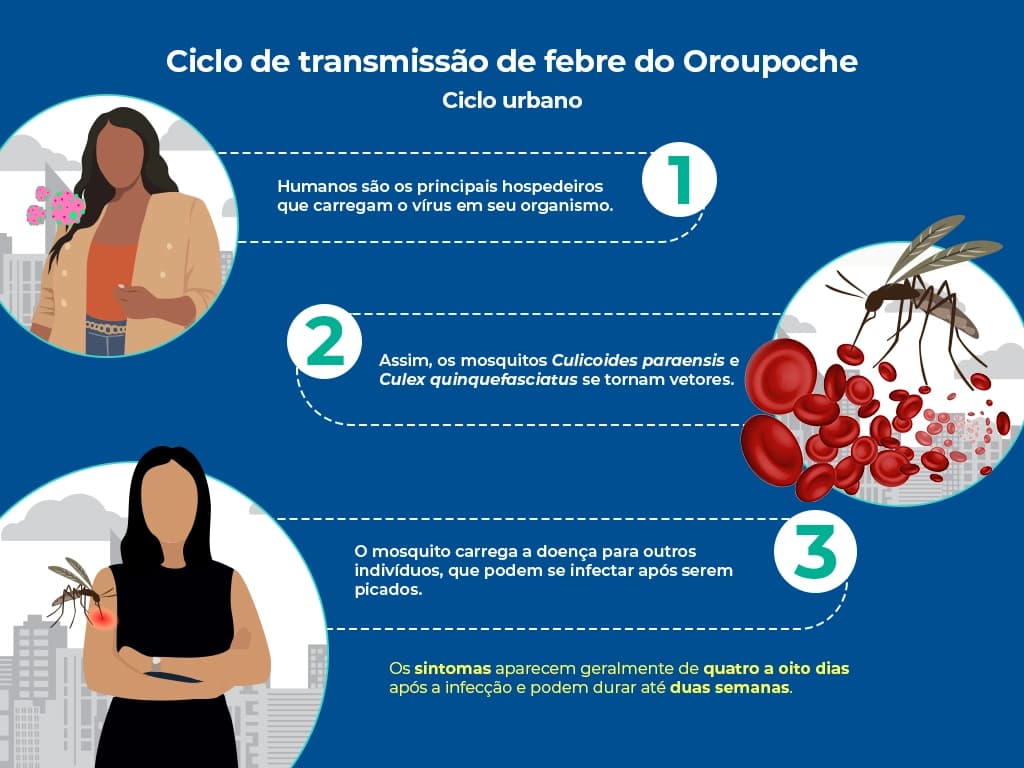
Symptoms typically appear four to eight days after infection and may last up to two weeks.
There are two transmission cycles of Oropouche Fever:
Diagnosis of Oropouche Fever is made through clinical and laboratory tests. Depending on the stage of the disease, the following tests are recommended:
There is no specific treatment for Oropouche Fever. Disease management focuses mainly on symptom relief. This may include administering pain and fever medications, hydration (about two liters per day for adults), and rest. Follow-up with a general practitioner or infectious disease specialist is essential to monitor symptom progression.
Main preventive measures against Oropouche Fever include:
Pernambuco State Health Department
Read health-related content and expand your knowledge

Transmission occurs mainly through the bite of the Aedes aegypti mosquito, and may occur sexually, d [...]
Transmission occurs mainly through the bite of the Aedes aegypti mosquito, and may occur s [...]

It is a viral disease transmitted by the bite of infected mosquitoes, especially Aedes aegypti and A [...]
It is a viral disease transmitted by the bite of infected mosquitoes, especially Aedes aeg [...]

Causes a disease similar to Chikungunya and dengue, and its transmission occurs through mosquitoes o [...]
Causes a disease similar to Chikungunya and dengue, and its transmission occurs through mo [...]
Transmission occurs mainly through the bite of the Aedes aegypti mosquito, and may occur sexually, d [...]
Transmission occurs mainly through the bite of the Aedes aegypti mosquito, and may occur s [...]
It is a viral disease transmitted by the bite of infected mosquitoes, especially Aedes aegypti and A [...]
It is a viral disease transmitted by the bite of infected mosquitoes, especially Aedes aeg [...]
Causes a disease similar to Chikungunya and dengue, and its transmission occurs through mosquitoes o [...]
Causes a disease similar to Chikungunya and dengue, and its transmission occurs through mo [...]